

How to Handle Parking Disputes With Neighbors Peacefully
What if the best way to resolve a parking dispute is to make the first conversation smaller, not stronger? A car blocking a driveway or repeatedly taking a shared spot can disrupt your day, but starting with blame may make a tense situation harder to solve. If you’re wondering how to handle parking disputes with neighbors peacefully, begin with a calm, specific request about what happened and what would help.
It’s understandable to feel frustrated, especially when the problem keeps happening or you’re unsure what your neighbor intended. Explain the practical impact without assuming a motive, then give them room to share their perspective.
This guide covers how to describe the issue, open a respectful conversation, and agree on a parking arrangement that works for both households. It also explains measured next steps if the problem continues, including how a Driver Sticker can send a considerate vehicle-related alert. It can make a first contact easier, but it isn’t a substitute for dialogue or a guaranteed resolution.
Key Takeaways
- Separate what you observed, such as blocked access, from assumptions about why your neighbor parked there.
- Consider whether space, schedules, guests, or unclear expectations may be contributing to the problem.
- Choose a calm moment to explain the impact and make one clear request that invites your neighbor’s perspective.
- If the issue continues, refer to the arrangement you discussed and agree on a practical next step.
- For a simple vehicle-related heads-up, a Driver Sticker enables secure, anonymous text alerts. It supports communication but can’t resolve a dispute on its own.
Start a Neighbor Parking Dispute by Defining the Specific Problem
A parking problem can disrupt an ordinary routine and leave you frustrated, especially if it keeps happening. But a conflict may begin with a misunderstanding: your neighbor might not realize their car makes it difficult for you to get in or out, or may understand a shared space differently. A useful first step in how to handle parking disputes with neighbors peacefully is to describe what happened without deciding why it happened.
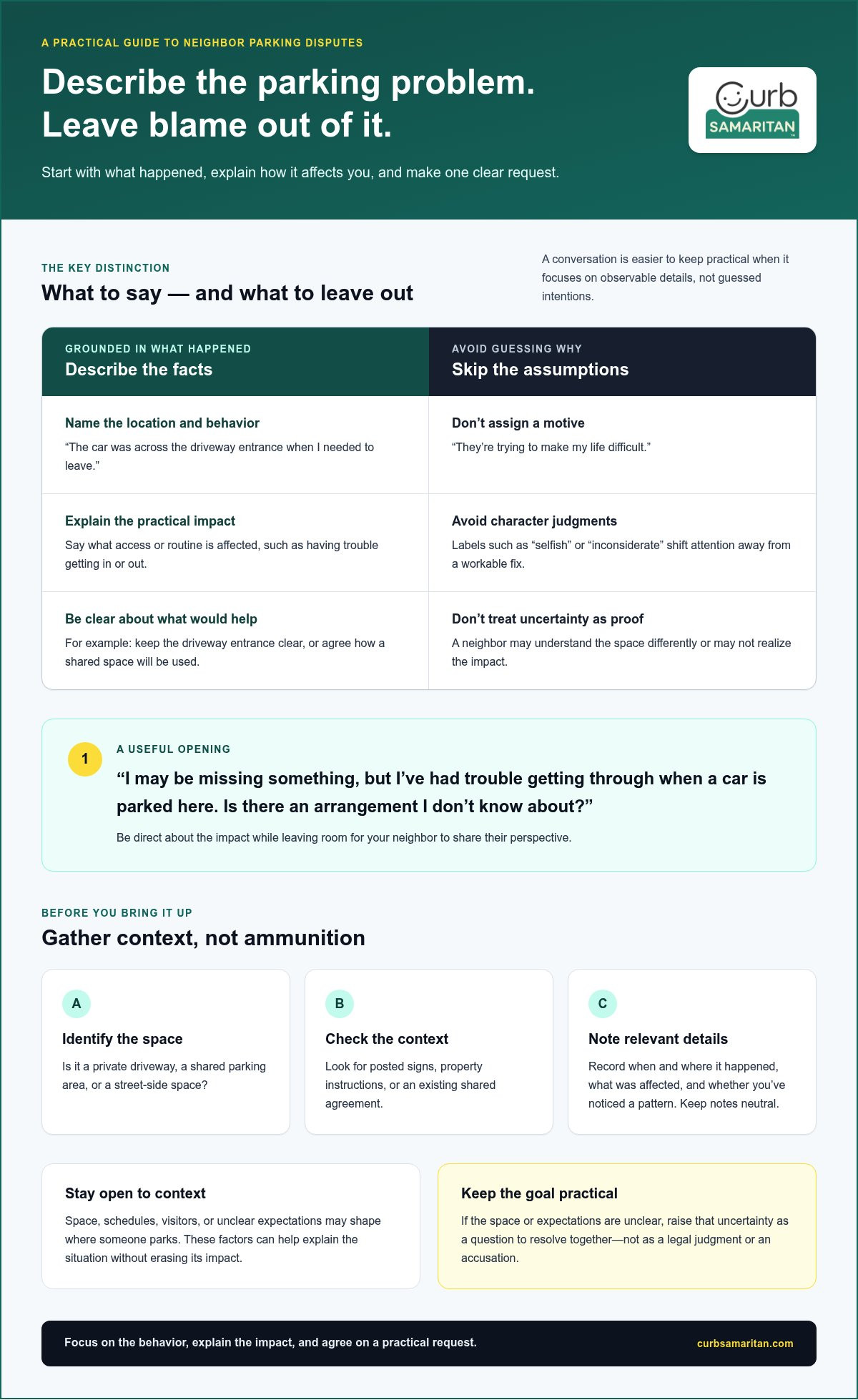
Separate what you observed from what you suspect. “The car was across the driveway entrance when I needed to leave” is specific. “They’re trying to make my life difficult” assigns a motive you may not know. Clear facts make it easier to explain the impact and hear the other person’s account. This is a practical starting point for respectful Dispute Resolution Methods.
Which parking situations commonly lead to neighbor disagreements?
Disagreements can start when a vehicle partly blocks a driveway, someone regularly uses a space others consider shared, or neighbors have different expectations about guest parking. The same behavior can affect people differently: one household may see a brief stop as convenient, while another needs that area clear to get in or out. Name the location and explain how the parking affects you rather than labeling anyone inconsiderate.
How can you prepare without building a case against your neighbor?
Before raising the issue, jot down a few relevant details: when and where it happened, what access or routine was affected, and whether you’ve noticed a recurring pattern. Keep the notes neutral. A short record can help you explain the problem clearly without turning the conversation into a list of accusations.
Then define the practical change you’re hoping for. You might need the driveway entrance kept clear, or a shared space used according to an agreed arrangement. A concrete request gives both neighbors something manageable to discuss.
- Check the space: Is it a private driveway, a shared parking area, or a street-side space?
- Look for guidance: Review posted signs, property instructions, or an existing shared agreement.
- Describe the impact: Focus on what the parking prevents or makes difficult, not what you think the other person intended.
These distinctions help you understand what expectations may apply without making a legal judgment. If the space is shared or the guidance is unclear, acknowledge that uncertainty. Raise it as a question to resolve together rather than assuming your neighbor understands the same rules or arrangement you do.
Preparation isn’t about proving fault. It’s about explaining the situation calmly, with enough detail to make the problem understandable and a clear idea of what would help.
Understand Both Sides Before Discussing a Parking Dispute
A parking arrangement can look obvious to one neighbor and completely different to another. Limited spaces, work schedules, visitors, or an informal routine that was never discussed may shape where someone parks. These factors can help explain the situation, but they don’t erase the impact if you’re losing access or your routine is disrupted.
Hold two ideas at once: the problem matters, and you may not yet know why it’s happening. Your neighbor could be unaware that a car’s position makes it difficult to leave, or may believe the space is available at that time. Curiosity can make a conversation less defensive without requiring you to downplay your concern.
How do you separate impact from intention?
Describe what the parking behavior changes for you. For example, explain that you have to ask someone to move before you can get out, or that a shared space isn’t available when you usually need it. Avoid character judgments such as “selfish” or “inconsiderate.” If you don’t know the reason, use tentative language: “I’m not sure if you realized…”
A useful first conversation describes the behavior and impact, not presumed intent.
This distinction keeps the discussion focused on a practical fix. Be direct about the impact while leaving room for an explanation: “I may be missing something, but I’ve had trouble getting through when a car is parked here. Is there an arrangement I don’t know about?” That wording isn’t an excuse for the problem. It’s an opening to compare what each person understands.
What if both neighbors believe the space is theirs to use?
Pause before proposing a new arrangement. Ask how each of you came to understand the space: was it part of an earlier conversation, a regular habit, or a posted instruction? Compare those understandings with signs, property guidance, or any shared agreement. Use these materials as context for discussion, not as a reason to make legal claims.
If the guidance doesn’t resolve the uncertainty, seek information specific to the property from an appropriate manager or qualified local professional. A neutral person can sometimes help clarify the arrangement. The U.S. Department of Justice describes its Community Relations Service for Conflict Resolution as supporting conflict resolution in communities. Its information offers context on the role neutral assistance can play.
Before you talk, consider what you genuinely need and where you can be flexible. Maybe access must stay clear, while the exact parking spot or timing can be discussed. That gives both neighbors a chance to find a workable adjustment instead of debating who is a better person or whose frustration matters more.
If a simple vehicle-related heads-up would make initial communication easier, a Driver Sticker from Curb Samaritan offers a way to send a private alert. It can support a considerate first contact, but a conversation is still needed to understand different expectations and agree on a lasting arrangement.
What to Say When You Bring Up a Parking Problem
A clear, courteous conversation gives your neighbor a chance to understand the problem and respond. Choose a moment when neither of you is rushing or already upset. Keep your message focused: describe what you observed, explain how it affects you, and ask for one specific change. The goal isn’t to win an argument. It’s to find out whether a practical adjustment can help.
How can you make a clear parking request without sounding accusatory?
Use “I” statements to describe the effect on your access or routine, and make your request specific enough to answer. Avoid bringing up unrelated frustrations or making broad demands. You might say:
“Hi, could I ask about the parking by the entrance? I’ve had trouble getting through when a car is parked there. Would you be able to leave that area clear? I may not know the full arrangement, so I’m happy to hear your perspective.”
This wording names the issue without assigning blame. It asks for a specific change and leaves room for context or an alternative. A conversation focused on listening and practical needs reflects the approach explored in these Community Dispute Resolution Strategies.
Should you talk in person, leave a note, or send a message?
Choose a private channel that feels appropriate and safe. A brief face-to-face conversation can make it easier to hear each other’s tone. A note or message may feel more comfortable if you don’t know the neighbor well or want to choose your words carefully. Keep the message short, courteous, and limited to the parking concern.
Whatever channel you choose, avoid raising the issue in front of other neighbors or leaving an angry note on a vehicle. Public criticism can feel humiliating, while a heated message can come across more harshly than you intended. If your neighbor is in a hurry, wait for a calmer moment. A pause is often more useful than trying to force the conversation right away.
They may still react defensively. If voices rise or the discussion turns into a debate about character, don’t push to settle everything on the spot. You can say, “I don’t want this to turn into an argument. Let’s pause and talk again when we’re both ready.” Then step away calmly. That keeps your request clear without escalating the exchange.
Learning how to handle parking disputes with neighbors peacefully means being direct while staying open to a response. If approaching someone in person feels awkward, a Driver Sticker offers another way to send a considerate vehicle-related alert. Explore Curb Samaritan’s Driver Sticker as a communication aid, not a replacement for discussing an ongoing problem.
Agree on Next Steps if the Parking Problem Continues
A respectful conversation may lead to an arrangement, but it can take time for a new routine to stick. Before you part, briefly restate what you agreed to and what would help. For example: “Thanks for talking this through. We’ll keep the entrance clear, and I’ll let you know if access is still difficult.” Give the arrangement a reasonable opportunity to work before treating one repeat incident as proof that nothing has changed.
How do you follow up without turning the disagreement into a feud?
If the problem happens again, keep your follow-up short and tied to the original request. Recognize any improvement, then explain what still needs attention: “I appreciate that the entrance has been clear most days. It was blocked again this morning, so I couldn’t get out as planned. Could we return to the arrangement we discussed?”
Stick to what happened and what you need next. Avoid repeated confrontations, public shaming, or retaliatory parking. Those responses can shift the focus from finding a workable arrangement to trading grievances. A calm, consistent follow-up helps keep the issue specific.
When might a neutral third party be helpful?
For parking on shared property, a property manager or relevant community contact may be able to clarify posted guidance or an existing arrangement. Share the practical concern and ask for help understanding the expectations. If both neighbors are willing but can’t reach common ground, a neutral mediator may help structure a conversation. Mediation is an option, not a guaranteed outcome.
Choose the next step based on what’s happening. A recurring inconvenience, such as uncertainty about how to share a space, can often be addressed through another calm discussion or the appropriate property contact. A situation that creates an immediate safety concern is different. Prioritize safety and seek appropriate help rather than waiting for a neighbor conversation or mediation to resolve it.
As you decide how to handle parking disputes with neighbors peacefully, keep a simple record of the arrangement discussed, whether it improved, and what remains unresolved. This helps you explain the issue clearly if you need to involve someone responsible for the shared property. It also helps you avoid restarting the conversation from frustration each time the problem returns.
A Driver Sticker can provide a considerate way to send a vehicle-related alert as one small communication aid. It won’t settle a recurring disagreement, but it can help with a simple heads-up. Explore Curb Samaritan’s Driver Sticker as an optional way to support neighborly communication.
Use a Private Vehicle Alert to Support a Considerate First Contact
Sometimes a driver may not realize their parking is causing an inconvenience. A brief alert can offer a low-pressure way to share that information, especially if you don’t know the driver or can’t speak with them at the moment. It’s a first-contact tool, not a way to settle a recurring disagreement. If the issue continues, a direct, respectful conversation is still important.
When is a QR-based driver alert a useful first step?
A QR-based alert may help with a simple heads-up, such as letting a driver know their vehicle is making it harder to use a shared entrance. Curb Samaritan’s Driver Sticker uses a QR code to enable secure, anonymous text alerts. A passerby can send a message without using an app or sharing personal information. Keep the note brief and kind, such as, “Your car may be blocking access. Could you take a look when you can?”
That message can draw attention to an issue, but it can’t confirm what arrangement applies or ensure a response. It also isn’t a substitute for urgent assistance if there’s an immediate safety concern. For more context on how these stickers support private alerts, see the guide to anonymous car stickers.
How can private neighbor communication keep the tone constructive?
Focus any alert on the practical concern, not the driver’s character. A neutral message is easier to receive than one that sounds like a warning or accusation. Avoid sending repeated messages if you don’t get a reply. An alert is simply an opening for communication, and the recipient may not see it or may need more context before responding.
Private messaging can be useful when you want to avoid calling someone out in front of others. It can also help someone pass along a concern without exchanging phone numbers. Still, a message may not explain a shared arrangement or resolve a pattern that affects both households. A calm conversation gives each neighbor room to clarify expectations and discuss a workable next step. The guide to anonymous messaging for neighbors offers more on using private messages thoughtfully.
Use an alert for a simple, timely heads-up. Use a conversation to understand a repeated problem. That distinction keeps a private message supportive rather than treating it as a substitute for dialogue or a guaranteed fix. It also makes the next step clear if the same parking concern happens again.
If a private way to send a considerate vehicle alert would be useful, you can explore the Driver Sticker. It may support a first contact, while a respectful conversation remains the best path for working through an ongoing parking dispute and agreeing on what happens next.
Take One Calm Step Toward a Better Parking Routine
A better neighborly routine doesn’t require a perfect conversation. It can begin with one clear, respectful step and a willingness to keep the discussion practical. If you’re considering how to handle parking disputes with neighbors peacefully, remember that the aim is not to prove who’s right. It’s to make everyday access easier and leave room for a workable agreement.
For a simple vehicle-related heads-up, Curb Samaritan’s Driver Sticker offers a private way to send an alert. Each purchase includes lifetime access to the messaging platform. Use it as a communication aid, not a replacement for talking through a recurring concern or seeking appropriate help when safety is at stake.
Explore the Driver Sticker for a private way to send a considerate vehicle alert. Choose a gentle first step that fits the moment. Small acts of clear, thoughtful communication can help neighbors move forward with greater understanding.
Frequently Asked Questions
How do I talk to my neighbor about parking without starting an argument?
Ask if they have a moment to talk rather than raising the issue as they’re leaving or arriving home. Focus on one parking concern and describe its effect on your day without guessing at their reasons. If you’re thinking about how to handle parking disputes with neighbors peacefully, approach it as a shared problem to understand, not a verdict about who’s right. A calm opening makes it easier to discuss options.
What should I do if my neighbor keeps blocking my driveway?
If your driveway is blocked again, note when it happened and what access it prevented, then raise the repeated pattern calmly if it feels safe to do so. If you’ve already spoken, refer to the arrangement you discussed and ask what might help it work more consistently. For a shared property, a manager may clarify expectations. If the situation creates an immediate safety concern, seek appropriate help rather than waiting for a neighbor discussion.
Should I leave a note on my neighbor’s car about a parking problem?
A brief note can work if you can’t speak at a suitable time, but keep it courteous and focused on the immediate issue. For example: “Hi, your car may be making access difficult. Could you please check its position? Thank you.” Avoid accusations, threats, or a long account of past frustrations. A note may not lead to a conversation, so consider another direct, private way to communicate if the concern keeps happening.
What if my neighbor gets angry when I bring up parking?
Don’t try to settle the issue while either of you is upset. Keep your voice calm, say you’d rather continue later, and end the exchange without trading accusations. You can follow up in writing once the moment has passed, using a short message that sticks to the parking concern. If you feel unsafe, create distance and seek appropriate help. A peaceful resolution shouldn’t require you to stay in a threatening conversation.
Can a QR code help me contact a neighbor about a parking issue anonymously?
Yes. Curb Samaritan’s Driver Sticker uses a QR code to let someone send a secure, anonymous text alert without an app or sharing personal information. It may suit a simple heads-up when a driver hasn’t noticed an inconvenience. It can’t ensure the driver sees or answers the message, and it won’t resolve a recurring disagreement by itself. Use a conversation or another appropriate next step if the parking issue continues.
How can neighbors agree on parking in a shared space?
Talk through the practical details that can cause confusion: which areas need to stay clear, how spaces are used at different times, and what happens when guests visit. Suggest a straightforward arrangement both households can follow, then put the agreed points in a message so each person can refer back to them. If schedules or needs change, revisit the plan together instead of assuming an old routine still works for everyone.
When should I involve a property manager in a neighbor parking dispute?
Contact the property manager or relevant community contact when shared-space expectations are unclear, posted guidance is hard to interpret, or the agreed arrangement isn’t holding. Share concise details about what’s happening and ask for clarification on the property’s parking expectations. This can shift the discussion from differing assumptions to a common reference point. If the concern involves immediate danger, don’t rely on a routine management conversation as a substitute for appropriate urgent help.