

Neighborhood Safety QR Stickers: A Practical Guide for 2026
What if a neighbor could let you know your garage door was open without asking for your phone number? Neighborhood safety QR stickers give a passerby a way to scan a code and send a private, anonymous text alert. Neither person needs to share personal contact information or install an app. It’s a simple way to turn an everyday observation into a neighbor-to-neighbor message.
It’s understandable to be cautious. Sharing your number publicly can feel intrusive, and a QR sticker shouldn’t suggest that someone is watching your home or that help is guaranteed in an emergency. Think of it as a communication prompt, not surveillance or professional monitoring. It can help neighbors pass along useful information, but it can’t prevent harm or promise a response.
This guide explains what neighborhood safety QR stickers can and can’t do, how they differ from traditional signs, and how to introduce them thoughtfully. You’ll learn what to consider when choosing a location and how Curb Samaritan’s Resident Sticker, Neighborhood Connect Sticker Bundle, and QR Code Posters support private, practical alerts. The goal is to make it easier for neighbors to look out for one another, at a pace that feels right for the community.
Key Takeaways
- Understand how neighborhood safety QR stickers turn a visible code into a simple way to send useful neighbor-to-neighbor alerts.
- Compare signs, group chats, and QR-enabled messaging to decide which channel best fits your community’s needs.
- Choose a placement that’s easy to notice, relevant to the alert, and used with permission.
- Introduce the idea by explaining its purpose clearly, so neighbors know it’s a communication tool, not a promise of monitoring or emergency response.
- Explore how a Resident Sticker, Neighborhood Connect Sticker Bundle, or QR Code Poster can support everyday community communication.
What Neighborhood Safety QR Stickers Are, and What They Actually Do
A neighborhood safety QR sticker displays a code that lets a passerby send a message to a resident. Its purpose is straightforward: make it easier to share a considerate, useful alert when someone notices something a neighbor may want to know. With Curb Samaritan, a person can scan the code to send a secure, anonymous text alert without sharing personal information or installing an app.
This differs from a conventional safety sign. A sign can display a warning or instruction, such as asking visitors to keep a gate closed. It communicates in one direction. A QR sticker adds a private way for someone to contact a resident with an observation. It doesn’t replace a sign; it gives people another way to reach someone.
This approach can complement familiar community efforts. Neighborhood Watch programs encourage residents to stay attentive and share relevant concerns. A QR code offers another possible communication channel, especially when neighbors don’t already have one another’s contact details. The sticker prompts people to help one another; it doesn’t indicate that a home is being watched.
How a neighborhood QR sticker supports everyday awareness
Imagine a passerby noticing that a garage door is open or spotting an issue in a shared community space. If a relevant sticker is visible, they can scan it and send an alert to the resident without exchanging personal contact information. That can make a small, practical act of neighborly care easier, while leaving the choice to respond with the person receiving the message.
The point is to make useful observations easier to share, not to treat every unusual detail as a threat. Residents can explain what the sticker is for and where it applies, so passersby know when an alert might be welcome. Clear expectations help keep messages focused on considerate communication about a home or shared space.
What a QR sticker cannot promise
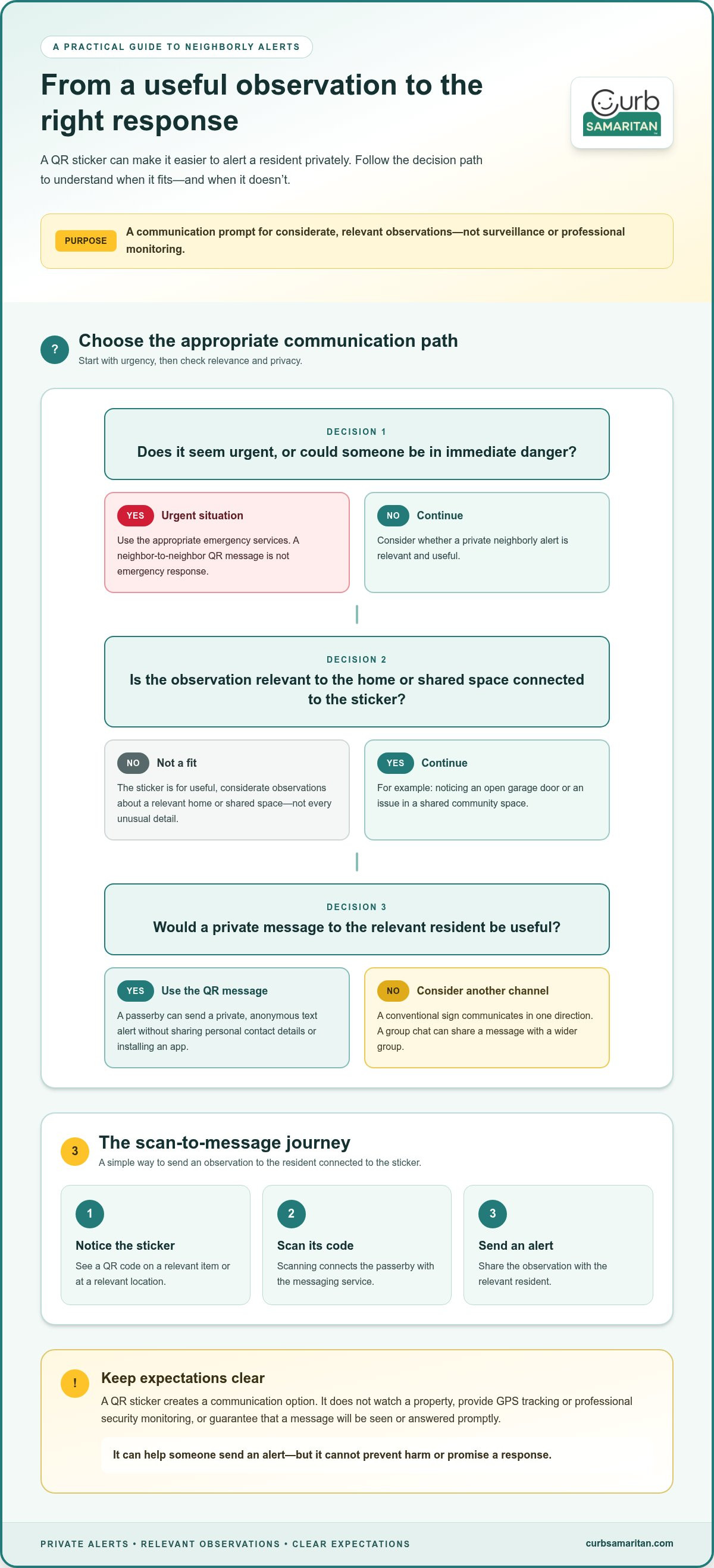
A QR sticker is not professional security monitoring or GPS tracking. It doesn’t watch a property, assess a situation, or guarantee that a message will be seen or answered promptly. A resident may be unavailable, and a passerby may choose not to send an alert. The sticker creates a communication option; it can’t control what happens after someone uses it.
A QR sticker can help someone send an alert, but it isn’t emergency response. If a situation appears urgent or someone may be in immediate danger, use the appropriate emergency services rather than relying on a neighbor-to-neighbor message. Keeping that distinction clear sets realistic expectations and prevents a communication tool from being mistaken for a promise of protection.
How Neighborhood Safety QR Stickers Enable Private, Neighborly Alerts
A useful alert starts with a simple observation: someone notices something relevant and wants to let the right resident know. Neighborhood safety QR stickers give that passerby a direct way to send a message without needing the resident’s phone number. The process is designed to be straightforward, not a complicated reporting system.
A simple scan-to-message journey
The passerby’s goal is to share a helpful observation with the resident connected to the sticker, rather than broadcast it to an entire group. The process has three basic steps:
- Notice the sticker. The passerby sees a QR code on a relevant item or at a relevant location.
- Scan its QR code. Scanning connects them with the messaging service.
- Send an alert. They share the observation with the relevant resident.
A scan connects a passerby with a resident so they can send a private text alert. Curb Samaritan messaging doesn’t require a mobile app, so someone can send a note without downloading one first. There’s also no need to display a phone number on a public-facing sticker.
Why privacy matters in community alerts
Putting a personal number on a sticker makes it visible to anyone who passes by. A messaging service offers a different approach: the passerby can send an alert without sharing personal information. Curb Samaritan’s messages are secure and anonymous, allowing neighbors to communicate without exchanging contact details just to pass along an observation.
Consider a shared laundry room where a resident notices that a faucet has been left running. A nearby neighbor could use a posted QR code to send a note, rather than searching for the resident’s number or raising the issue in a large group chat. It’s a practical courtesy, not necessarily an urgent safety matter. Residents and communities can set expectations about which messages are welcome.
For context on organized neighborhood watch efforts, see the Neighborhood Watch Manual from the Office of Justice Programs. A QR messaging option can serve as one modest communication channel within a community’s approach. It doesn’t replace shared expectations, local coordination, or emergency services.
Privacy also depends on making the purpose clear. A sticker invites a message; it doesn’t mean residents are monitoring an area, and it can’t promise that someone will see or answer an alert promptly. For neighbors who want to make considerate messages easier to send without posting personal numbers, a Curb Samaritan Resident Sticker provides a physical QR-coded option for private alerts.
Neighborhood Safety QR Stickers Compared with Signs and Alert Groups
A sign, a group chat, and a QR-enabled message can all help neighbors share information, but they serve different purposes. Choose based on whether you want to display a standing notice, reach people already connected, or give a passerby a way to contact a resident from a specific location. These options can also complement one another.
| Option | Visibility | Can it start a direct exchange? | Privacy considerations |
|---|---|---|---|
| Conventional sign | Publicly visible where it’s displayed | Usually no; it presents a message or instruction | Anyone nearby can read the notice |
| Group chat | Visible to members in the chat | Yes, within the existing group | Messages are shared with group members |
| QR-enabled private messaging | Visible where the code is placed | Yes, a passerby can start a message to the resident | With Curb Samaritan, alerts are secure and anonymous, without sharing personal information |
When a sign, group chat, or QR sticker may fit
Use a conventional sign when the message itself is enough. A notice about closing a gate or keeping a shared entrance clear can inform people without inviting a conversation. A group chat can work well for neighbors who already belong to it and want to share updates with one another. It keeps the exchange among the group, rather than directing a message to one resident.
A QR sticker offers a different route: it lets someone at a physical location initiate a private message to the relevant resident. For example, a person who notices a package left in a shared lobby could use a code posted there to send a note. A general sign may not provide a way to reach the person involved. Neighborhood safety QR stickers are most useful when a direct contact option adds something a sign or group chat doesn’t.
There’s no need to treat one method as the winner in every situation. A community might use a sign to share a standing instruction, a group chat for updates among members, and a QR code where a passerby may have a specific observation to pass along. Match the channel to the message and the people who need to receive it.
Separate communication from surveillance
A safety label can raise a question: does it mean someone is watching the area? With a QR messaging sticker, the answer is no. The code provides a way to contact a resident; it doesn’t observe a home or shared space. Curb Samaritan does not provide GPS tracking or professional security monitoring.
A contact point invites communication; it doesn’t watch over an area. Explaining that distinction when introducing a sticker helps neighbors understand its limited, practical role. It’s a tool for sharing an alert, not a promise that the location is monitored or that a message will receive a particular response.
Placing and Introducing Neighborhood Safety QR Stickers
A QR sticker works best when its location makes its purpose easy to understand. A code beside a home’s entrance, for example, can invite a passerby to send a relevant note to that resident. A code in a shared area may serve a broader community purpose, but only if people understand who will receive messages. Thoughtful placement helps avoid confusion and makes the invitation feel considerate rather than intrusive.
Choose a clear, appropriate placement
Before placing a sticker, consider what a passerby will see and whether the code clearly relates to the resident or shared space it represents. Make it visible enough to notice, while keeping its purpose specific. If the sticker would go on property controlled by someone else, get permission first.
- Make the recipient clear. A passerby should be able to tell whether the code is for a resident, a shared entrance, or another community contact.
- Match the location to the use. A sticker on a resident’s own property can support a message about that home; a shared-space code should have a clearly understood community purpose.
- Respect the space. Ask the person responsible before placing a sticker on property you don’t control, and choose a location that doesn’t obstruct a sign or instruction.
Nearby wording can clarify the invitation. Keep it brief and specific, such as: “Scan to send the resident a helpful note about this home. This is not an emergency service.” That tells people why the code is there without suggesting that the location is monitored or that urgent help will arrive.
Make the community introduction feel welcoming
Before placing neighborhood safety QR stickers in a shared setting, explain the idea in plain language. Say who the messages are intended for, which observations may be useful, and what the sticker doesn’t do. Leave room for questions. Residents should understand the purpose and be able to decide whether they’re comfortable with the approach, without feeling pressured to participate.
Set expectations with a calm, direct explanation: the sticker offers a way to send a message, but it doesn’t guarantee an immediate reply or replace emergency services. You might say, “This gives neighbors a private way to pass along a helpful note. It isn’t monitored, so use emergency services for urgent situations.” Clear language can address concerns that a QR code implies surveillance or a guaranteed response.
For a fuller discussion of how private alerts can protect personal contact details, refer neighbors to Anonymous Messaging for Neighbors: Privacy-First Guide. Sharing a resource alongside a brief explanation gives people room to consider the idea at their own pace.
Once residents understand the purpose and agree on a suitable place, a Curb Samaritan Resident Sticker provides a physical QR contact point for home-related messages.
How Curb Samaritan Neighborhood QR Stickers Fit Into Everyday Community Life
A physical QR code gives neighbors a simple way to share a useful note without putting a resident’s phone number on display. Curb Samaritan’s QR-coded items connect a passerby with secure, anonymous text alerts. The platform doesn’t require an app or personal information sharing, and each purchase includes lifetime access without recurring subscription fees.
Match the sticker format to the communication setting
The best format depends on who the message is meant to reach and where the code will be seen. A Resident Sticker fits a resident-focused setting, while QR Code Posters provide a poster format for community communication. The Neighborhood Connect Sticker Bundle is another option for neighbors considering a shared approach. Each offers a physical place to start a message, so choose a format that suits the intended setting.
For example, a resident might use a Resident Sticker as a contact point for messages related to their home. A community group could consider QR Code Posters for a shared area where residents and visitors need a clear way to send a note. Neighbors considering the Neighborhood Connect Sticker Bundle can discuss how a shared QR messaging option might fit their community. Keep the intended recipient and purpose clear, especially in shared spaces.
These options are communication tools, not a neighborhood watch service. A scan can make it easier to send a message, but it doesn’t ensure that a resident will see or answer it, prevent harm, or provide emergency help. A thoughtful introduction and clear description of the sticker’s purpose help neighbors understand what to expect.
A privacy-first next step for neighbors
For residents, the appeal is practical: make considerate contact easier while avoiding publicly displaying personal contact details. A passerby can use the code to send an alert, and the recipient can decide how to respond. That private exchange can support neighborly awareness without suggesting that anyone is watching over the area.
Neighbors who want to think more about how a QR code can support home privacy can also explore the Guide to Secure Messaging Stickers for Home Privacy. It’s a companion resource for considering what private messaging can offer and where its limits are.
If a physical QR contact point feels right for your home or community, explore Curb Samaritan neighborhood stickers and choose the format that best fits how you want to communicate.
Start a Neighborly Conversation
Before choosing where neighborhood safety QR stickers might fit, invite a few neighbors to shape how they’ll be used. Agree on the purpose, who should receive messages, and what kinds of everyday observations would be useful to share. A shared understanding can make the sticker feel like a considerate community choice rather than an unexplained notice.
Keep the first step small. Discuss one suitable location, prepare clear wording, and give residents room to raise concerns or suggest changes. The goal isn’t to create a perfect safety plan overnight. It’s to make it easier for neighbors to look out for one another in a way that feels respectful and comfortable.
If your community is ready to consider a QR-based contact option, explore Curb Samaritan neighborhood stickers. A thoughtful conversation can be the start of stronger everyday connections, one helpful message at a time.
Frequently Asked Questions
Can a neighborhood QR sticker replace a neighborhood watch?
No. A QR sticker is a communication aid, not a neighborhood watch organization, monitoring service, or emergency response system. It may let someone send a private message, but it can’t coordinate volunteers or guarantee that anyone will act. A watch group can agree on how neighbors share and follow up on concerns; a sticker alone can’t create that coordination. Communities can use it alongside their existing relationships and safety practices.
How can an HOA introduce QR stickers without collecting residents’ personal information?
An HOA can explain the sticker’s purpose and limits, then choose an appropriate placement with permission. Curb Samaritan stickers let someone send a secure, anonymous text alert without sharing personal information or installing an app. For example, an HOA might describe the code as a way for a passerby to send a relevant note to a resident, not as an HOA reporting or message-management system.
What should a neighborhood QR sticker say beside its code?
Use a brief prompt that names the intended recipient and gives an example of an appropriate message. For instance: “Scan to send the resident a helpful note about this home.” Keep the wording easy to read at the placement site. Don’t imply that the code provides surveillance, emergency dispatch, or a guaranteed reply. Clear language lets passersby decide whether scanning fits the situation.
Can neighborhood safety QR stickers be placed in shared spaces?
They can be used in shared spaces when the location suits the intended audience and the person responsible for the property gives permission. For example, a building manager or community association may need to approve a poster in a common area. Choose a visible, relevant spot, and explain that the QR code enables messaging, not monitoring. The right placement depends on who controls the space and its purpose.
Are neighborhood QR stickers useful in apartment communities?
In apartment communities, neighborhood safety QR stickers can give residents a simple way to send a relevant note, such as flagging a concern about a shared entrance. They don’t replace building management or emergency channels. Introduce the idea clearly, get permission before using a common area, and explain that messages don’t guarantee immediate help or a reply. Participation can remain a personal choice for each resident.
What happens if a neighbor scans a QR sticker but does not send a message?
A scan by itself isn’t an alert. A resident shouldn’t assume someone has contacted them unless a message arrives through the service. The sticker gives a passerby a way to send a message if they choose, but scanning alone doesn’t communicate the observation. For example, if someone scans while considering whether to report a minor concern, no message has been sent until they choose to send one.