

Secure Way to Return Lost Keys: Privacy-First Guide 2026
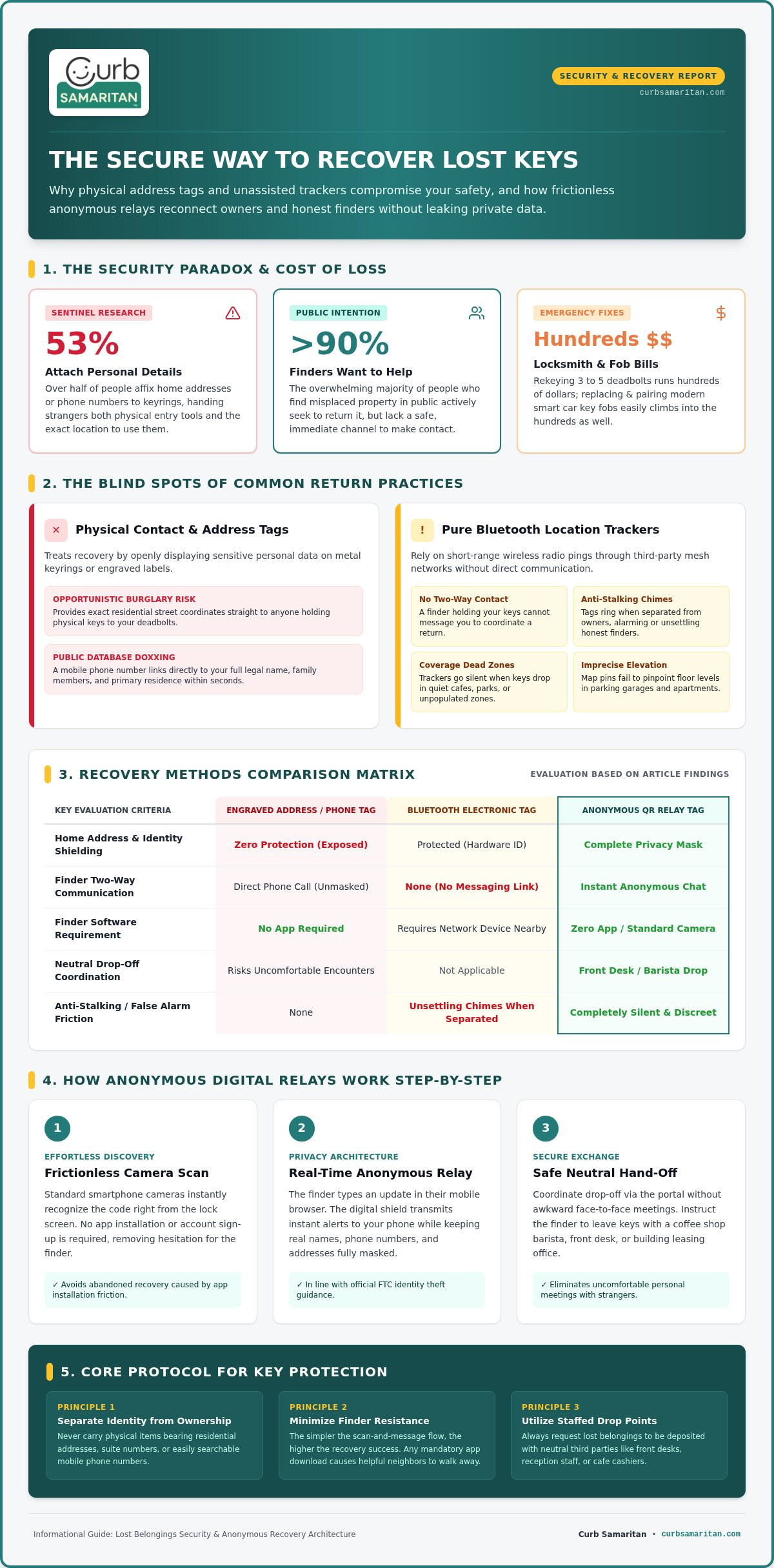
According to security research by Sentinel, over 53% of people attach personal details to their keyrings, handing strangers both physical keys and the exact address to use them. Misplacing your keys is stressful enough without worrying about a break-in or facing steep locksmith bills to rekey your doors. Most neighbors genuinely want to do the right thing, but you shouldn't have to broadcast your private life on a metal tag. Finding a secure way to return lost keys shouldn't force you to gamble with your personal safety.
In this guide, you'll discover how modern anonymous communication enables secure lost key recovery without revealing your personal address or phone number. We'll explore how simple, private return mechanisms connect helpful finders directly with owners, establishing a low-effort system that protects your physical property and keeps your private data safe.
Key Takeaways
- Putting your home address or phone number on a keyring introduces serious home security and privacy risks if misplaced.
- Discover the most secure way to return lost keys using private communication channels that conceal your identity and location.
- Understand how app-free digital relays let helpful neighbors reach you immediately without forcing anyone to install software.
- Compare popular recovery options to evaluate how modern tags stack up against slow postal services and noisy Bluetooth trackers.
- Explore practical keychain habits and discreet tools like the Found Sticker that make reuniting with your belongings simple and safe.
Why Traditional Key Return Methods Put Your Personal Safety at Risk
Most lost key solutions tell you what to do after your ring goes missing. Locksmith blogs tell you to rekey every exterior lock right away, and roadside assistance programs offer to pop your car door open. Neither approach actually helps you get your property back. Rekeying three to five home deadbolts often runs hundreds of dollars, while replacing and pairing a modern smart car key fob easily climbs into the hundreds as well. These emergency fixes treat the symptom while completely ignoring safe recovery.
A genuinely secure way to return lost keys requires separating physical ownership from personal identity. When someone finds your ring, they need a path to reach you that doesn't hand them the keys to your life.
The Dangers of Physical Address and Contact Labels
Attaching a home address tag to your keyring creates an open invitation for opportunistic burglary. Anyone picking up your keys gains physical entry tools paired with exact street coordinates. Even engraving a personal mobile number poses major privacy hazards. A quick search through public databases can link a standard phone number to your full name, family members, and residence within seconds. Personal identifying markers should never travel on items you carry outside your home every day.
The Blind Spots of Pure Bluetooth Location Tracking
Bluetooth trackers have become standard gear, but they leave critical gaps during an actual loss. The wider market for electronic key finder technologies highlights how short-range signals depend heavily on nearby network devices. When keys slip between cushions in a quiet cafe or drop in an empty park, those trackers go silent.
Even when a tracker shows a general map location, you face clear obstacles:
- No two-way contact: A bystander holding your keys cannot send you a message to coordinate a safe return.
- Anti-stalking friction: Modern tags start chiming when separated from their owners, confusing or unnerving whoever picks them up.
- Imprecise elevation: Trackers rarely identify which floor of an apartment complex or parking garage your keys are on.
Over 90% of people who find lost property in public want to return it. Without a direct, anonymous bridge between finder and owner, that goodwill goes to waste. The most secure way to return lost keys empowers honest neighbors to help without sacrificing your privacy or peace of mind.
How Anonymous Key Return Systems Work: Step-by-Step
Getting missing items back shouldn't depend on strangers guessing how to reach you. Modern recovery models treat privacy as a core requirement rather than an afterthought. By replacing readable tags with secure digital conduits, you establish a reliable way for people to reach out without compromising your personal space. Understanding how this process unfolds shows why it is the most secure way to return lost keys today.
Step 1: Discovering the Tag and Frictionless Scanning
When someone notices misplaced keys on a bench or sidewalk, action needs to be effortless. Standard smartphone cameras instantly read universal scannable codes right from the lock screen. No one has to download a new app or create an account just to be helpful. Forcing people to install unfamiliar software creates friction, leading many to walk away. Clean visual cues right on the tag clearly prompt the finder to point their camera and start the recovery flow in seconds.
Step 2: Relaying Real-Time Details Without Exchanging Numbers
After scanning the tag, the finder's mobile browser opens a secure messaging screen. An anonymous relay architecture acts as a protective digital shield, transmitting messages between two parties while keeping the phone numbers, real names, and home addresses of both completely masked. The finder writes a brief update, such as "Left your keys with the front desk barista." That message routes immediately as an alert to your phone. Following official FTC guidance on identity theft protection means keeping personal identifiers off daily items, and this private relay preserves that boundary entirely.
Step 3: Coordinating a Safe, Neutral Key Hand-Off
Once you see the alert, you can reply directly through the same private portal. There's no need to organize an awkward face-to-face meeting with an unfamiliar person. You can suggest leaving the ring at a staffed reception counter, a nearby coffee shop register, or a leasing office. Checking this 2026 checklist for QR code stickers on lost items provides useful tips for setting up safe return habits. If you want a dependable setup that keeps personal details offline, exploring simple privacy solutions from Curb Samaritan makes protecting your daily essentials easy and stress-free.
This closed loop delivers an effective, secure way to return lost keys. It welcomes community support, prevents identity exposure, and brings your essential items back home safely.
Comparing Popular Key Recovery Options: Security, Privacy, and Convenience
When your keys vanish, you quickly discover that conventional recovery options force a frustrating compromise between speed, personal privacy, and everyday reliability. Finding a genuinely secure way to return lost keys means evaluating how each option performs when a stranger actually picks up your keyring from the pavement.
Evaluating Postal Drop-Box Key Return Programs
Classic metal tags stamped with "drop in any mailbox" have existed for decades. While they keep your home address off the keychain, they rely entirely on postal sorting and standard mail handling. You might wait two to three weeks without any status updates or confirmation that someone found your keys. During those weeks of silence, your home and vehicle remain vulnerable, forcing you to replace expensive deadbolts and fobs long before the package arrives.
The Limitations of Active Bluetooth and GPS Hardware
Battery-powered tracking fobs have become popular carry items, but they carry distinct operational gaps. Batteries die over time, leaving tags unresponsive right when you need them most. More importantly, an active beacon tells you where an item was last detected on a map, not who holds it. A courteous stranger who picks up your keys cannot initiate contact with you, leaving both parties stuck in limbo.
The Rise of Digital Privacy Return Labels
Modern scannable privacy tags solve these issues by pairing immediate communication with complete identity protection. Because they operate passively, they never suffer from dead batteries or hardware obsolescence. They also eliminate recurring monthly subscription fees while giving finders an instant, app-free path to send a note. The same logic protects other daily gear; for instance, many families now use QR code tags for school bags and backpacks to safeguard everyday belongings without listing private names or home numbers publicly.
Combining instant messaging with complete anonymity makes scannable privacy tags an exceptionally secure way to return lost keys. You receive quick answers, your neighbor gets an effortless way to help, and your personal data stays completely private.
Practical Steps to Protect Your Keychain from Permanent Loss
Establishing a secure way to return lost keys starts with basic prevention before you ever leave the house. Most people unknowingly carry unnecessary security risks right in their pockets. Taking a few proactive steps streamlines the recovery process and keeps your home secure.
Conducting a Keychain Privacy Audit
Take an honest look at your keyring today. Many daily attachments reveal personal habits, schedules, and locations without you realizing it. Gym tags, grocery loyalty barcodes, and workplace access badges can point directly to the places you visit every week. Strip away anything non-essential. Avoid tags stamped with unit numbers, street addresses, or vehicle license plates. When traveling or spending time in busy public venues, consider keeping your house keys on a separate ring from your car fob to minimize exposure.
Selecting Durable and Noticeable Identification Tags
A recovery tag only works if a finder notices it right away. Everyday friction inside pockets and bags quickly scuffs cheap plastic, making details illegible. Choose resilient, weather-resistant materials that handle daily wear with ease. High-contrast designs catch the eye, while short, friendly instructions show finders exactly what to do. You can take this same protective approach beyond your pocket; check out this guide to anonymous car stickers for secure alerts to help neighbors notify you about vehicle issues without sharing personal details.
Establishing Safe Hand-Off Protocols
When someone reaches out through your anonymous relay, maintain clear personal boundaries. You can protect both parties by following sensible hand-off guidelines:
- Pick neutral meeting locations: Arrange drops at staffed reception areas, community center desks, or local coffee shop registers.
- Never meet at your home: Avoid inviting an unfamiliar person to your doorstep to collect or deliver keys.
- Express simple gratitude: A warm thank-you message acknowledges their kindness while keeping the exchange professional and safe.
Taking these simple measures turns everyday community goodwill into an organized, secure way to return lost keys. If you are ready to protect your keyring with reliable, subscription-free privacy tags, order your Curb Samaritan tags today to secure your everyday belongings.
Building a Safer Community: The Curb Samaritan Solution for Lost Belongings
Technology works best when it brings people together rather than getting in the way. Most people genuinely want to help when they spot misplaced property on a sidewalk or park bench. What holds them back is friction: confusing return instructions, intrusive apps, or the awkwardness of sharing personal contact info with a stranger. Curb Samaritan bridges that gap by turning everyday accessories into private channels for mutual aid. Designing a secure way to return lost keys creates an immediate connection between thoughtful community members and owners who want their essentials back.
How the Found Sticker Simplifies Everyday Property Recovery
The Found Sticker provides a durable, discreet safeguard engineered specifically for key rings, electronic fobs, and daily carry items. Its weather-resistant finish easily handles constant friction inside pockets and bags. When a good Samaritan notices your ring, they know exactly what to do. Pointing a standard mobile camera at the tag opens an instant messaging interface directly in their browser. Your phone receives their alert immediately, yet your real telephone number and street address remain completely invisible. The entire exchange happens smoothly without requiring account registrations or software downloads.
Kindness Without Compromise: No Apps and No Monthly Fees
Protecting your peace of mind shouldn't lock you into perpetual charges. Many asset-tracking products trap users under recurring monthly subscription fees just to keep basic messaging active. Curb Samaritan takes a different path, combining an easy one-time setup with lifetime messaging access. This model keeps recovery tools accessible, reliable, and completely private for everyone. The same practical protection secures other vulnerable household members as well; families often rely on smart pet ID tag lifetime access to safeguard four-legged companions using the exact same private return workflow.
Safe communities thrive when helping a neighbor feels natural and risk-free. Using a Found Sticker gives you an effortless, secure way to return lost keys while encouraging neighborly goodwill wherever you travel.
Take Control of Your Keychain Privacy Today
Losing track of your keys shouldn't mean risking your personal safety or draining your wallet on emergency lock replacements. When you separate your physical address and phone number from your keyring, you eliminate the risk of burglary while keeping the door open for everyday kindness. Empowering neighbors to help through private, direct communication offers the most secure way to return lost keys.
With complete privacy protection keeping phone numbers and street addresses hidden, you can carry your daily essentials with total confidence. There are zero app downloads required for instant community alerts, and a quick setup provides lifetime secure messaging access without recurring monthly subscriptions. It creates a simple, dependable shield for your everyday carry.
Ready to upgrade your keychain and welcome neighborhood goodwill without compromising your personal boundaries? Protect your keys with a private, app-free Found Sticker and enjoy genuine peace of mind wherever you travel.
Frequently Asked Questions
What is the most secure way to return lost keys without exposing personal information?
Using an anonymous scan-to-message QR tag like the Curb Samaritan Found Sticker is the most secure way to return lost keys. It replaces exposed physical markers with a private digital relay. When someone scans the tag with their phone, a secure browser window opens. They can send a location update directly to you without ever seeing your name, personal phone number, or home address.
Can someone find my home address if they pick up my lost car keys?
Yes, if your keychain includes identifying items like gym tags, store loyalty barcodes, or direct address labels. Even an engraved phone number allows anyone to run a quick reverse lookup and discover your street address. That is why separating your physical keys from personal identifiers is vital. Keeping your contact details hidden behind a private messaging system ensures that a lost fob doesn't compromise your front door.
Do finders need to install a special mobile app to scan a recovery tag?
No, finders never need to download an application or sign up for an account. Modern smartphone cameras scan universal QR codes directly from the basic camera app. Scanning opens an instant web browser screen where the finder can type a quick message. Removing the chore of downloading extra software makes people much more likely to stop, scan, and help you get your belongings back safely.
What should I do immediately after realizing my keys are missing?
First, retrace your steps and check with the lost-and-found desks of venues you recently visited. If your keys carry an anonymous recovery tag, check your phone for incoming relay messages from helpful community members. You should also temporarily switch to a backup house key or car fob. If your missing ring displayed your actual home address, call a locksmith right away to protect your residence.
Why are QR code key tags safer than traditional engraved phone number tags?
Traditional tags reveal your direct telephone number to anyone who looks at your keyring. Public records and search tools can quickly link that single number to your full name, relatives, and private residence. QR-based recovery tags solve this risk by routing all conversations through a secure digital relay. They provide a secure way to return lost keys by keeping your personal contact details entirely confidential.
How does an anonymous text alert system protect my personal phone number?
The system acts as a protective shield between you and the person who finds your keys. When the finder submits a note through the online form, the platform converts it into a secure text message sent to your mobile device. When you respond, the system forwards your message back through the browser portal. Neither person ever views the other's actual phone number or personal identity.
What happens if a lost key is found in an area without cell service?
If someone discovers your keys on a remote trail or in a basement parking garage without reception, they can pick them up and scan the tag once they return to mobile service or Wi-Fi. The tag features clear instructional text directing the finder to scan the code to alert the owner. As soon as their device connects to a network, their browser loads the messaging page instantly.