

QR Code Poster for Neighborhood Communication Guide
What if a neighborhood invitation made it easy to say hello without asking anyone to share a personal number? A qr code poster for neighborhood communication can give neighbors a clear next step, especially when paper notices are easy to miss or become outdated. The poster should explain what happens after someone scans, so people know what they’re choosing to do.
It’s natural to want a friendly gathering and an easy way to connect while respecting everyone’s privacy. A thoughtful poster shares the key event details and explains how neighbors can reach the organizer. Curb Samaritan QR Code Posters provide a privacy-conscious way to send an anonymous text alert without a mobile app or sharing personal information.
This guide covers how to shape a welcoming invitation, choose what information to include, and set clear expectations for a scan. You’ll also find ways to keep communication useful before, during, and after a gathering, so neighbors can take part at their own comfort level.
Key Takeaways
- Use a qr code poster for neighborhood communication to connect a physical notice with a useful digital next step.
- Explain what neighbors can expect before they scan.
- Compare printed, digital, and QR-enabled invitations by visibility, convenience, and follow-up needs.
- Plan a poster with a clear headline, essential details, and one prominent call to action.
- Explore how Curb Samaritan QR Code Posters and the Neighborhood Connect Sticker Bundle can support neighbor-to-neighbor communication.
Why use a QR code poster for neighborhood communication?
A neighborhood QR poster is a printed notice with a scannable code that points people toward a digital next step. That step might provide event details or give someone a way to send a message. The What is a QR Code? overview explains how phones read these codes. On the poster, tell neighbors what they’ll find or be able to do after scanning.
A QR poster connects a visible, printed invitation with a clear digital next step. It doesn’t have to replace a conversation, a community board, or an invitation shared through a digital group. Instead, it can help those channels work together. A neighbor might notice the poster in a shared space, hear more about the gathering from someone nearby, and scan later when they’re ready.
For example, a block party poster can state the date and essential event details, then direct neighbors to a way to find updates. Someone who sees it can understand the basics without joining an existing group chat. A poster can also have a non-event purpose, such as offering a way to message a neighbor. Its usefulness depends on whether the printed invitation leads to a relevant next step.
Use plain language to set expectations before someone scans. “Scan for block party details” and “Scan to send a message” describe different actions. Avoid making people guess whether the code opens information, starts a conversation, or leads somewhere else.
What should a neighborhood QR poster help people do?
Choose one primary action. If the goal is to share event details, make that the focus. If neighbors should be able to send a message, say so. Put the instruction beside the code, and check that it describes the destination accurately. The printed information introduces the purpose; the digital step carries the details or communication forward.
When does a printed invitation help more than a digital-only notice?
A printed notice can work well in shared spaces where residents naturally pause or pass by, such as a community board or common area. It provides a physical reminder, while a digital-only message relies on someone seeing it in a group, inbox, or other online channel. Neither reaches everyone. Pairing a poster with conversation or a digital invitation gives neighbors more than one way to hear about a gathering.
Make the invitation easy to act on, but don’t rely on a scan to provide all the context. A few well-chosen words can explain what the gathering is, who’s welcome, and what the code does. That clarity helps someone decide whether to join, learn more, or come back to the details later.
How does a QR code poster connect a printed invitation to digital communication?
A printed notice catches a neighbor’s attention; a QR code connects it to a next step. The experience should feel simple and predictable, not like a mystery hidden behind a pattern of squares. Before scanning, people should be able to tell whether the code is for event information, messaging, or another specific purpose.
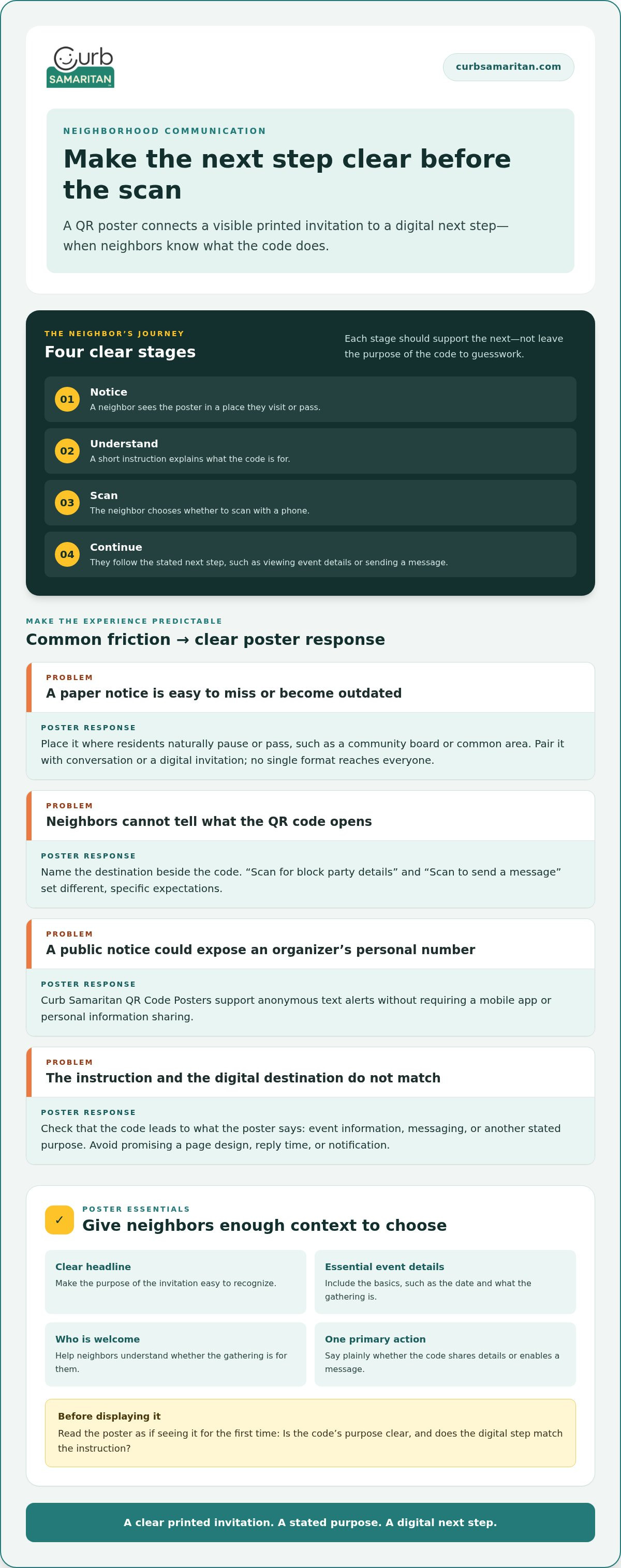
Notice the poster, understand its purpose, scan the code, then follow the stated next step. That’s the journey. A QR code poster for neighborhood communication works best when each part supports the next: the poster earns attention, its wording sets expectations, and the digital action helps the neighbor respond or learn more.
- Notice: A neighbor sees the poster in a place they visit or pass.
- Understand: A short instruction explains what the code is for.
- Scan: The neighbor chooses to use a phone to scan it.
- Continue: They follow the stated next step, such as viewing event details or sending a message.
Keep the invitation specific and the instructions plain. “Scan for gathering details” sets a different expectation from “Scan to send a message.” Avoid wording that leaves people unsure whether they’ll find information, start a conversation, or take another action.
What should a neighbor expect after scanning?
Describe the purpose before the scan, then make sure the digital step matches that description. If the code is intended for event details, say so. If it’s for messaging, make that clear instead. Don’t promise a particular page design, reply time, or notification. Accurate expectations let neighbors decide whether to continue without guessing what will happen.
Curb Samaritan’s QR-enabled products support secure, anonymous text alerts without requiring a mobile app or personal information sharing. That gives neighbors a way to reach out without printing an organizer’s personal phone number on a public notice. Explain that the code is for sending a text alert, and keep the instruction straightforward.
How can QR communication respect privacy?
Share only the information the invitation needs. Organizers can provide event basics and a clear contact route without displaying a personal number where anyone passing by can copy it. Curb Samaritan’s platform supports anonymous text alerts without requiring personal information sharing or an app. For more context, explore this guide to anonymous messaging for neighbors.
Before displaying a poster, read it as if you were seeing it for the first time. Is the code’s purpose clear? Does the invitation explain what happens next? A quick review can make scanning feel more comfortable. Curb Samaritan QR Code Posters connect a printed notice with neighbor-to-neighbor communication.
QR code poster or digital invitation: which approach fits your community?
Each invitation format has strengths. Choose based on how neighbors are likely to hear about the gathering and what they need to do next. A digital message is easy to share with an established group. A printed poster provides a visible reminder. A QR-enabled poster combines physical visibility with a digital next step, provided its purpose is clear.
| Format | Visibility | Convenience | Follow-up |
|---|---|---|---|
| Printed poster | Can be noticed in shared spaces people pass through. | Event basics are readable without opening a message. | Needs a readable contact or other next step for questions. |
| Digital-only invitation | Appears in the channels where it’s shared. | Easy to forward or revisit for people who use that channel. | Can support follow-up within an existing digital conversation. |
| QR-enabled poster | Combines a physical reminder with a scannable option. | Offers a digital next step to neighbors who choose to scan. | Can direct interested neighbors toward a stated action. |
These formats aren’t competing answers for every community. A printed notice may reach someone who isn’t in the event’s message group; a digital invitation may be easier for that group to share and revisit. A QR poster can bridge physical visibility and digital action, but only when its purpose is clear and the next step is useful.
When is a QR poster a better fit than a digital-only invitation?
Consider a poster when residents share a space where they naturally gather or pass by, and a physical reminder could reach beyond existing message groups. No single route suits everyone. Keep essential event details readable on the poster and include another contact or information path where appropriate. Scanning should be optional, not a requirement for understanding the invitation.
How should organizers choose a communication path?
Start with the gathering and the people you hope to reach. If most follow-up will happen in a group neighbors already use, a digital invitation may be enough. If visibility in a shared space matters, add a printed notice. If people need a bridge from that notice to more details or a message, a QR code can help. Use it when it leads somewhere clear, rather than adding a step without a purpose.
Plan for follow-up, too. A casual get-together may need only basic details and a way to ask a question. A gathering with changing information may need a clear route to updates. For related context on communication that doesn’t require an app, see this no-app QR code contact sticker guide.
A qr code poster for neighborhood communication is one part of a broader invitation plan. Pair it with channels your community already uses, keep key information visible, and let neighbors choose how they prefer to connect.
How to plan a neighborhood QR poster that people feel comfortable using
A welcoming poster makes its purpose easy to understand and its next step easy to choose. Keep the design focused: use one clear headline, essential event or communication details, and one prominent call to action. A qr code poster for neighborhood communication should make sense to someone who only glances at it and give enough context to someone deciding whether to scan.
What information belongs on a community invitation poster?
Lead with the notice’s purpose, then include what a neighbor needs to decide whether to take part. For an event, that may include its name, date, time, and location. For another communication purpose, state it plainly. Keep the copy brief enough to read at a glance, and don’t print personal information you wouldn’t want displayed publicly.
How can organizers make scanning feel clear and optional?
Say what the code is intended to help a neighbor do, such as find more event information or send a message. Don’t suggest that scanning is required to attend or participate unless it truly is. Keep essential details in print, and offer a suitable alternative, such as a public organizer contact route, for people who prefer not to scan.
Use this workflow to shape the poster from idea to follow-up:
- Define the purpose. Decide on the one main action the poster should support. Trying to cover event details, several announcements, and unrelated requests at once can leave neighbors unsure where to start.
- Draft the invitation. Write a short headline, essential details, and a direct call to action. Read it from a neighbor’s point of view: can they tell what’s happening and whether it’s relevant to them?
- Explain the scan. Place a plain-language instruction near the code. State whether it leads to event information or a way to message. Make sure the wording matches the intended next step.
- Choose a visible placement. Put the poster where neighbors can notice and read it. Keep the essential printed details and an option for non-scanners useful without requiring a phone.
- Review feedback. After sharing the invitation, listen for questions or confusion. If neighbors aren’t sure what the code does, revise the instruction. If key event details are missing, make them easier to find next time.
Before posting, check that the call to action stands out and the surrounding text doesn’t compete with it. Explain the code’s purpose, but leave enough room for the invitation to feel friendly rather than crowded. Neighbors should be able to understand the basics without scanning, then choose whether the digital next step suits them.
Curb Samaritan QR Code Posters connect a printed notice with digital communication. Explore Curb Samaritan’s QR Code Posters as you plan a clear, useful, and welcoming invitation.
How Curb Samaritan QR Code Posters can support neighbor-to-neighbor connection
A helpful community notice can invite a small act of kindness: sharing useful information, reaching out about a concern, or making it easier for neighbors to connect. Curb Samaritan QR Code Posters provide a physical option for that communication. The code connects a printed notice with a digital next step, while clear wording lets passersby understand its purpose before deciding whether to scan.
Curb Samaritan’s QR-enabled products support secure, anonymous text alerts without requiring a mobile app or personal information sharing. Neighbors can send an alert without putting a personal phone number on public display. Each purchase includes lifetime access to the messaging platform, giving the physical poster an ongoing messaging function.
What makes a QR-enabled poster useful for neighbors?
Pair an easy-to-understand purpose with a practical next step. A passerby should be able to tell what kind of communication the poster supports, then choose whether to scan. Anonymous text alerts can provide a privacy-conscious way to reach out, but a poster doesn’t replace a conversation or guarantee a particular outcome. The goal is to support simple, considerate communication between neighbors.
This can help in everyday moments when one person has information another may appreciate. A clear poster gives a passerby a way to act without needing to find or publish someone’s personal contact details. Keep the message calm and direct: explain what the alert is for and let the recipient decide how to respond. A welcoming tone encourages helpful participation without relying on fear or surveillance.
How can a poster fit into a broader community communication plan?
Use the poster as one part of a larger invitation, not the only route for reaching residents. Pair it with event details and communication methods neighbors already use. Keep printed information useful on its own, explain the QR code’s purpose, and update the notice when plans change so it doesn’t leave people relying on outdated details.
For example, a gathering invitation can share essential details in print and through familiar community channels, while a QR-enabled communication option serves a separate, clearly stated purpose. This keeps event information distinct from text alerts and lets residents choose the route that suits them. For a related home-based use, Curb Samaritan’s guide to secure messaging stickers for home privacy offers additional context.
A well-planned qr code poster for neighborhood communication makes its purpose plain, respects people’s comfort, and supports connection without making scanning compulsory. Explore Curb Samaritan’s neighborhood communication options.
Make your next neighborhood invitation easier to join
A welcoming gathering often begins with a simple invitation and a thoughtful way for people to respond. Choose the one action you most want neighbors to take, then make it clear and comfortable. A qr code poster for neighborhood communication can carry that invitation beyond a conversation while leaving people free to connect in the way that suits them.
Think of the poster as an opening, not the whole community plan. Keep the message current, make its purpose easy to understand, and give neighbors a friendly reason to take part. Those choices can turn a notice into a more personal invitation and help connection grow naturally.
Curb Samaritan QR Code Posters offer a physical way to invite that next step. Explore Curb Samaritan’s QR Code Posters to find an option for your community’s communication.
With a clear invitation and a little care, you can make it easier for neighbors to meet, share, and build a more connected community.
Frequently Asked Questions
Can a QR code poster help neighbors communicate?
Yes. A QR code poster for neighborhood communication can help neighbors learn about a gathering or reach a useful digital next step. Someone who isn’t part of an online group may spot the notice in a shared space and find out how to get event information. Explain the code’s purpose before people scan it, and continue using conversations or familiar community channels so the poster isn’t the only way to hear the news.
What should a neighborhood QR code poster include?
Include the purpose of the notice, essential details, and one clear action. For a community cleanup, that might mean the date, meeting place, and an instruction such as “Scan for details.” Explain what the code is meant to provide, and avoid publishing a personal phone number if you don’t want it widely visible. If scanning isn’t necessary to participate, make the key information readable in print.
How do you make a QR code poster for a block party?
Decide what neighbors need to know and what you want them to do. Add a short headline, essential party details, and a direct instruction describing what the code leads to. The printed notice can provide the time and place, while the scan offers another way to access information. Make sure neighbors can understand the invitation without scanning.
Is a QR code poster better than a digital invitation?
Neither works best for every community. A digital invitation can be easy to share among people who already use its channel, while a poster can catch the attention of someone who hasn’t joined an online group. A QR-enabled poster connects the physical notice to a digital action. Consider who you’re inviting and how they usually get updates. Using both formats can offer more than one way to take part.
Can people scan a QR code without downloading an app?
Many smartphones can scan QR codes with a built-in camera feature, though the steps vary by device and settings. Curb Samaritan’s messaging approach doesn’t require a dedicated mobile app. Since not everyone will scan, keep essential details readable and explain what the code is for. Neighbors can understand the invitation first, then decide whether the digital option is convenient for them.
How can a neighborhood QR poster protect privacy?
Keep personal contact details off a public poster unless you’re comfortable displaying them, and describe the code’s purpose plainly. Curb Samaritan’s platform supports secure, anonymous text alerts without requiring personal information sharing. Be precise about what the messaging option offers, and don’t imply that every device or interaction is risk-free. Clear wording helps neighbors make an informed choice about whether to use it.
Where should a neighborhood communication poster be shared?
Place it in an appropriate shared space where intended residents are likely to notice and read it, such as a community notice area. Choose a spot where the poster won’t obstruct access or make other information harder to see, and follow the space’s posting expectations. One location won’t reach everyone, so pair the notice with a digital or direct invitation for neighbors who may not pass by.